Porosity test
Hair porosity test
Eight questions about how your hair behaves day to day. In a minute you’ll get your porosity type and tips on how to dry and straighten your hair so it doesn’t frizz.
- 8 questions
- about 1 minute
- no email needed
The test assesses porosity from the signs you notice every day. That makes it more reliable than a strand in a glass of water, but the result is still only a guide. Read more about each hair type in Anna Nowak-Ibisz’s guide to hair porosity.
Has your hair been bleached or permed?
What counts is the state of your lengths now, not what you’ve already cut off.
How long does your hair take to dry without a hair dryer?
After washing, when you let it air-dry.
What happens to your hair in the shower?
Notice the first few seconds under the water.
How does your hair look on a humid, rainy day?
Rain, fog or a steamy bathroom.
Run your fingers along a dry strand from the end to the root. What do you feel?
Against the grain, that is, toward the scalp.
How does your hair react to conditioners, masks and oils?
Think of the products you use most often.
What happens after you blow-dry with a brush or straighten your hair?
Think about the result the next day.
How does your hair look day to day?
Compare the lengths in daylight.
Tools that suit your hair
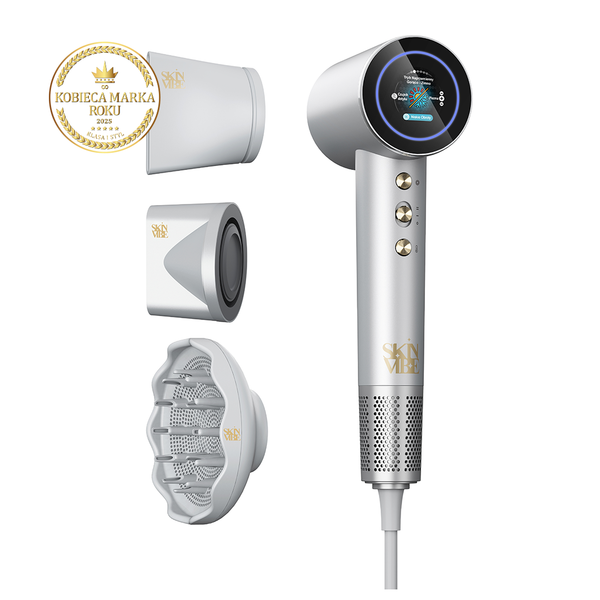
SkinVibe Aurea Family x Plasma Hair Dryer
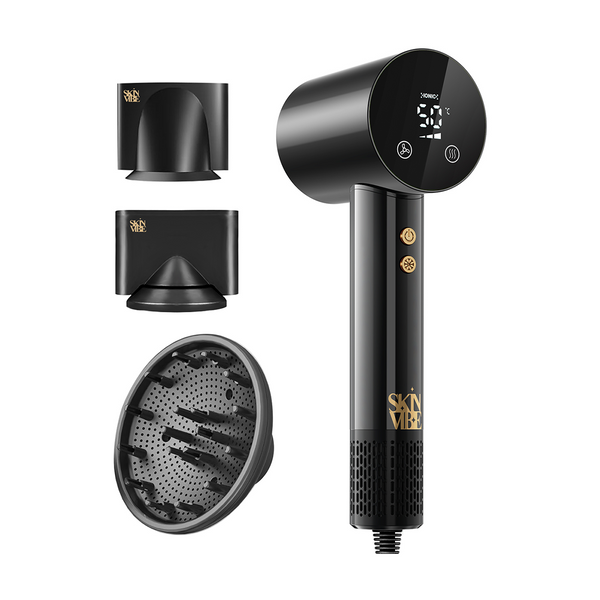
SkinVibe Libra AirLoom Hair Dryer
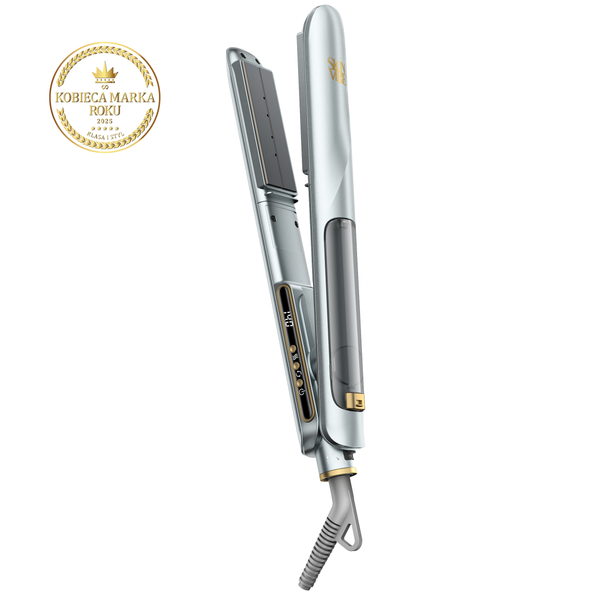
SkinVibe Astra SteamPlasma Hair Straightener
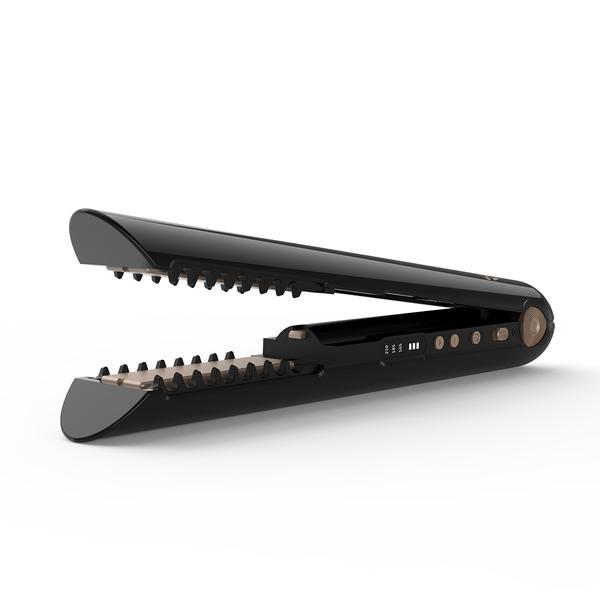
SkinVibe Luna MiniWireless Cordless Hair Straightener
How does the hair porosity test work?
Porosity describes how tightly the cuticle, the outer layer of the hair, lies against its inner part. You can’t see it with the naked eye, but you can recognize it from how your hair behaves: how quickly it soaks up water and dries, how it reacts to humidity, products and hot tools, how it feels to the touch and whether it shines. The test asks eight such questions. The question about bleaching and perms counts double, because these treatments change the structure of the hair the most.
Low, medium and high porosity hair
Low porosity hair has a tightly closed cuticle: it is smooth and shiny, but takes a long time to dry and is easily weighed down. Medium porosity hair has a slightly raised cuticle and is the easiest to style every day. High porosity hair has a raised or damaged cuticle: it absorbs water quickly and loses it quickly, which is why it frizzes in humidity. Many people have mixed porosity, meaning one porosity at the roots and another at the ends.
Why not the glass of water test?
Clean hair of any type floats on the surface of water thanks to surface tension, and product residue changes the result. That’s why trichologists treat the glass test as a curiosity and assess porosity by observing the hair. This test is based on exactly that.
What to do with your result?
Each porosity type needs a different drying and straightening temperature. In the hair porosity guide, Anna Nowak-Ibisz describes how to dry and straighten each type, how a diffuser, cool air and steam work, and how to choose your tools. If you’re looking for a specific model, our product match quiz will suggest a hair dryer or straightener in 90 seconds.