

Keratin treatment aftercare: how to wash, dry and straighten
After a keratin treatment, avoid moisture, hair ties and clips for 48-72 hours (after nanoplasty, usually about a day). Then wash 2-3 times a week with a sulfate-free, salt-free shampoo, always dry with a hair dryer and straighten only dry hair at about 160-180°C.

Keratin treatments and nanoplasty are something you pay for once at the salon and then every day in the bathroom: in the way you wash, dry and straighten your hair over the following months. I get lots of questions about this, because hairdressers’ advice is often contradictory and every salon online says something different. As a co-founder of SkinVibe, I don’t perform these treatments, but I do know what a hair dryer and a straightener do to hair, and that’s half of this puzzle.
Below, I’ve sorted out what most salons and product manufacturers repeat, marked where the sources differ, and added the part these guides are missing: how to actually dry and straighten your hair so the effect lasts longer, whether a steam straightener is a good idea after the treatment, and how aftercare after keratin differs from aftercare after nanoplasty. One rule above all: products differ, so the final word belongs to the hairdresser who did your treatment.
IN SHORT
- The first days are decisive. After a keratin treatment, for 48-72 hours (with some newer products: just a few hours), no moisture, hair ties, clips, tucking your hair behind your ear or sleeping on damp hair; after nanoplasty, the restrictions are shorter, usually about a day.
- Washing: 2-3 times a week, with a sulfate-free and salt-free shampoo and lukewarm water, then conditioner or a mask on the lengths.
- Drying: always with a hair dryer, until fully dry, at a medium temperature, with a concentrator from roots to ends while smoothing with a brush; finish with cool air. No diffuser.
- Straightener and curling iron: yes, but after the setting period, on dry hair, with a heat protectant and at a lower temperature than usual (up to about 160-180°C).
- How long it lasts: a keratin treatment several months, nanoplasty longer; when your hair starts to frizz at the roots and lose its smoothness, it’s a sign the effect is wearing off.
What happens to your hair after a keratin treatment and nanoplasty?
After a keratin treatment, the hair has a smoothing coating on its surface and in its outer layers, set with the heat of a straightener, which closes the cuticle and “remembers” the straight shape; nanoplasty works in a similar way, but with a different formula, and it usually straightens more and lasts longer. In both cases, the first hours and days after the treatment are the time when this coating stabilizes, which is exactly why the strictest rules apply then.
I promised not to pretend to be a hairdresser, so about the chemistry of the products only as much as you need for aftercare: a keratin treatment is a smoothing and rebuilding treatment with a setting period, repeated every few months; nanoplasty is a straightening treatment that lasts longer and has fewer restrictions, and it requires hair in good condition; so-called hair botox is regeneration without straightening, and it washes out after a dozen or so washes. One practical note before you choose a salon: in the European Union, a 2022 regulation requires a warning on the packaging of cosmetics that release formaldehyde, starting from very low concentrations; ask about the product’s ingredients and choose salons that show them without hesitation.
How long after a keratin treatment can you wash your hair: 2, 24, 48 or 72 hours?
It depends on the product, which is why the sources differ: the classic advice is 72 hours without washing and without moisture (the Polish hairdressing school Cut Cut Academy, among others, recommends this), some salons talk about 48 hours, and with some newer formulas your hairdresser will let you wash your hair after just a few hours; after nanoplasty, a day is usually enough. If you don’t remember what your hairdresser said, call them, because they’re the only person who knows which product was on your hair.
| Treatment | First wash (according to sources) | Setting period | Approximate duration |
|---|---|---|---|
| Keratin treatment (classic) | 48-72 h; newer formulas: as your hairdresser says, sometimes a few hours | up to 72 h: no moisture, hair ties, clips or sweat | several months (sources: from 2-4 to 3-6) |
| Nanoplasty | usually 24 h (some salons: straight away) | about a day, fewer restrictions | longer than keratin (sources: six months or more) |
| Hair botox | depends on the product | it doesn’t straighten, so there’s nothing to “ruin” | a dozen or so washes |
The numbers in the table are ranges from the guides of salons and hairdressing schools, not a standard. Treat them as a guide, and get the specifics from the person who did your treatment.
What must you not do during the setting period?
In the first days after a keratin treatment, you must not get your hair wet (rain, a swimming pool, a sauna, sweat after a workout), pin it up, tie it with a hair tie, tuck it behind your ear or slide a headband or sunglasses onto your head, and you need to sleep on perfectly dry hair worn loose; every bend will leave its mark in the coating while it sets. After nanoplasty, the same rules apply, just for a shorter time.
It sounds like an exaggeration until you see a hair tie mark that stays on the lengths for weeks. Product manufacturers and distributors, such as Cocochoco’s Polish distributor, write plainly about avoiding moisture and tying your hair, and about drying it in the direction it grows. If your hair gets wet or bent anyway, don’t wait: dry it straight away with a hair dryer and smooth it with a straightener on dry hair at a moderate temperature; most hairdressers recommend exactly this as “plan B”.
How do you wash your hair after a keratin treatment without rinsing out the effect?
Wash less often (2-3 times a week), with lukewarm water, using a shampoo without SLS and SLES sulfates and without salt (Sodium Chloride), focusing the lather on your scalp, and apply conditioner or a mask to the lengths; a final rinse with cool water closes the cuticle. Salons, schools and product manufacturers all agree on these rules.
Why sulfates and salt in particular? Because strong cleansing detergents and salt speed up rinsing the coating out of the hair, and hot water opens the cuticle and does the same. A simple test: if your hair squeaks “clean” after washing, the shampoo is too strong for the effect you paid for. The swimming pool only after the setting period (details in the questions at the end).
How do you dry your hair after a keratin treatment and nanoplasty?
Always with a hair dryer and until fully dry: at a medium temperature, with a concentrator guided from roots to ends, smoothing the strands with a brush, and finishing with a short burst of cool air. Don’t leave your hair to dry naturally and don’t use a diffuser; diffused air creates waves, and you want smoothness.
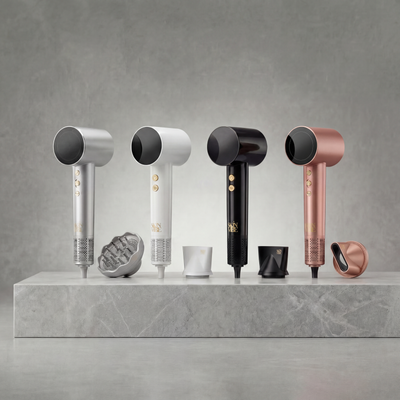
Here I can add something the salon guides are missing, because this is my area. Why “always with a hair dryer”? Because hair remembers the shape it dried in; dried section by section, downwards, with tension on a brush, it stays smooth until the next wash, while hair left to dry naturally falls however it wants, and then you have to fix it with a hot plate, which shortens the life of the effect. Why a medium temperature? Because hot air opens the cuticle and rinses out the coating faster; in our hair dryers, this is the warm setting (50-70°C in Libra), not the hot one, with a stronger rather than a weaker airflow, so drying doesn’t take long. Ionization or plasma help here indirectly: less frizz after drying means less “reheating” with a straightener the next day. And cool air? Some hairdressers say “no, heat sets it”, others “yes, it closes the cuticle”; both statements are true, because they’re about different moments. You dry with heat and switch to cool air only at the very end, on hair that’s already dry, for a dozen or so seconds. It’s a sequence, not a choice. I’ve described how to set up drying step by step in my guide on how to dry your hair properly.

Can you use a straightener after a keratin treatment, and at what temperature?
Yes, once the setting period is over, a straightener is allowed and even useful for touch-ups, on three conditions: your hair is 100% dry, you’ve applied a heat protectant, and the temperature is lower than usual, in most recommendations about 160-180°C. Salons such as the Polish Hair New Life write plainly about an upper limit of 160-180°C for tools after the treatment.
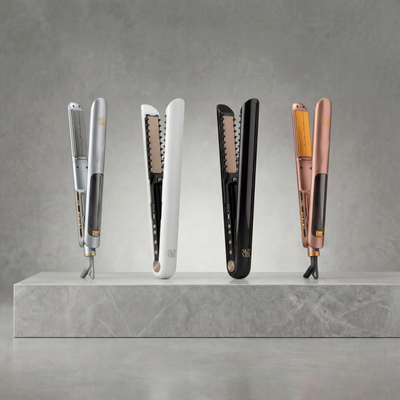
The high temperatures of the treatment itself (usually well above 200°C, depending on the product) are the hairdresser’s work with the product, not a model for home. At home after the treatment, your hair is smooth, so the straightener only has to “finish” the strand, and 160-180°C is enough for that, in a single pass. Our Astra SteamPlasma’s settings start at 140°C, which is very useful after keratin, and Luna MiniWireless at 165°C takes care of morning touch-ups of bangs and ends without getting out the big straightener. In my article on heat-damaged hair, I use research to show why temperature matters so much for hair.
Can you curl your hair after a keratin treatment?
You can, after the first wash following the treatment (so after the setting period), on dry hair, with a heat protectant and at a moderate temperature; you just need to know that curls on hair after keratin hold less well and for a shorter time, because the hair is smoothed and “wants” to be straight, and frequent curling with heat can shorten the effect of the treatment. If curls are what you mainly care about, a keratin treatment simply isn’t the treatment for you.
Technically, we curl the same way as always: sections of 2-3 cm, a single pass, holding the curl in your hand until it cools; I’ve described the full technique, including the mistakes, in my guide on how to curl hair with a straightener. After nanoplasty, the rule is the same, with even more emphasis on the fact that the straightening effect is stronger, so the curls will be loose.
Is a steam straightener good after keratin and nanoplasty?
Not during the setting period, because steam is moisture, and in those days there should be no moisture at all; once the treatment has set, steam from a straightener on dry hair exposes its coating to moisture much as washing does, only for a shorter time (it’s not the same as straightening wet hair), so if you follow the rules (dry hair, up to 180°C, heat protectant), you can use it, and if you have doubts, the steam function can simply be switched off. No Polish guide answers this question directly, so I’m saying it honestly: this is my assessment as someone who designs steam straighteners, not a salon recommendation; if your hairdresser says “no steam”, listen to your hairdresser.
Why I’m writing about this at all: steam in a straightener lets you achieve smoothness at a lower temperature, and a lower temperature is exactly what hair needs after the treatment. Astra SteamPlasma has steam you can switch off with a button, so in the first weeks after the treatment you can straighten “dry”, like a classic straightener with plasma, and later decide whether steam suits you. I’ve explained how steam works and who it makes sense for in my article on the steam straightener.
What should you do differently after nanoplasty than after keratin?
After nanoplasty, the rules are the same, but shorter and gentler: the first wash usually after about a day, coloring after just a few days, and the straightening effect is stronger and lasts longer; apart from that, the aftercare is identical: a gentle shampoo, drying with a hair dryer until fully dry, moderate tool temperatures. This is how it’s described, among others, in a guide by the Polish brand KillyS; Polish treatment trainer Basia Muszarska, on the other hand, points out that the timing of the first wash depends on the specific product.
A practical difference you can see in the bathroom: after nanoplasty, hair is more “straight and heavy”, so good drying alone is usually enough, without a straightener; after keratin, you more often need one pass with a straightener to start the day. The less often you reach for a hot plate, the longer the effect stays, regardless of the treatment.
How can you tell the effect is wearing off, and when should you repeat the treatment?
The effect wears off gradually: first, frizz returns at the roots and on humid days, then a wave on the lengths, your hair takes longer to dry and needs a straightener more often than once every few days; this usually happens a few months after a keratin treatment, and later after nanoplasty. You plan a repeat when your aftercare can no longer keep up, not by the calendar.
Two things really extend this time: discipline in washing (gentle shampoo, less often, a cool rinse) and discipline in temperature (hair dryer on medium, straightener up to 180°C, a single pass). One thing shortens it the most: fixing every day with a hot plate what you could style with a hair dryer and a brush.

Frequently asked questions about aftercare after a keratin treatment
How should you sleep after a keratin treatment?
On perfectly dry hair worn loose, ideally on a smooth silk or satin pillowcase, without a hair tie, a braid or a sleep cap; during the setting period, every bend stays. After that period, sleeping in a loose, low braid is fine.
Why isn’t my hair perfectly straight after keratin?
Because a keratin treatment above all smooths and tames, and how straight your hair ends up depends on the product, the technique and your natural curl pattern; a strong curl will be softened, not “ironed out”. If you want full straightening, ask about nanoplasty or plan one pass with a straightener after drying.
Can you color your hair after a keratin treatment?
Yes, but not straight away: postpone bleaching for at least four weeks; after nanoplasty, some sources allow coloring after just a few days. Agree on the timing with your hairdresser, because it depends on the product and on the condition of your hair.
Does hair have to be 100% dry before straightening after the treatment?
Yes, always, and especially after the treatment: damp hair steams from the inside under a hot plate and loses the effect faster. Dry it completely with a hair dryer, wait a moment and only then reach for the straightener.
Do you need a heat protectant after keratin?
Yes, before every use of a straightener or curling iron, even though your hair is already “protected” by the treatment; a heat protectant protects the hair, and the treatment protects the smoothness, and these are two different things. Choose light mists instead of heavy creams, without salt in the ingredients.
Does a keratin treatment damage hair?
The treatment itself, done correctly on healthy hair, shouldn’t damage it, but it combines high temperature with a product, so on very damaged, freshly bleached or brittle hair, a hairdresser may advise against it; this is a question for a specialist before the treatment, not for a guide.
Can you go swimming after a keratin treatment?
Not during the setting period; later, yes, with a swim cap or with oil on your hair, and as soon as you get out, rinse your hair and apply conditioner. Chlorine and salt shorten the effect.
How long does nanoplasty last?
According to salons and product manufacturers, longer than a keratin treatment, usually from about six months to more than a year, depending on the product, the hair and the aftercare; regular washing with a gentle shampoo and limiting heat extend this time.
Keratin and nanoplasty give you smooth hair, and your hair dryer and straightener decide how long you keep it. A medium temperature, dry hair, a single pass and days without heat; that’s the whole secret, regardless of what was on your hair at the salon.
Anna Nowak-Ibisz, co-founder of SkinVibe